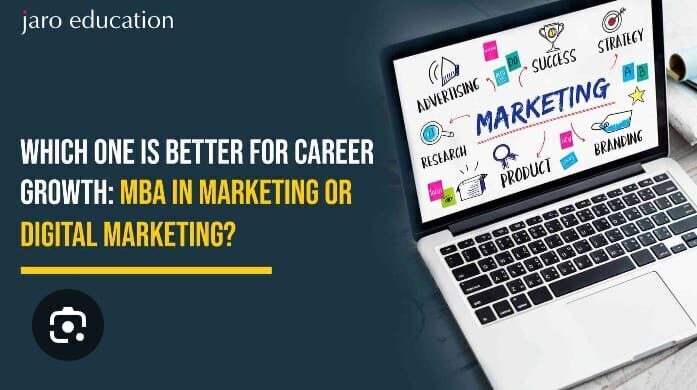
Choosing a career path after graduation can feel overwhelming, especially when two strong options in front of you: Digital Marketing or an MBA in Marketing. Both paths offer exciting opportunities, attractive salaries, and long-term growth. Many students choose digital marketing courses However, they differ significantly in terms of time investment, cost, learning style, and career trajectory. If you’re confused about which route to take, this detailed comparison will help you understand the advantages, challenges, and long-term prospects of each option so you can make an informed decision.
Understanding Digital Marketing as a Career
Digital marketing refers to promoting products and services through online platforms such as search engines, social media, email, and websites. It includes skills like Search Engine Optimization (SEO), social media marketing, content marketing, pay-per-click advertising, email marketing, and analytics.
One of the biggest advantages of digital marketing is accessibility. You don’t necessarily need a formal degree to get started. Many professionals build their careers through certifications, online courses,
internships, and hands-on projects. Platforms like Google and HubSpot offer globally recognized certifications that enhance credibility.
Digital marketing is also highly skill based. Your performance is measured through data—click-through rates, conversions, engagement, and ROI—making it a results-driven field. If you enjoy creativity combined with analytics, this career path can be highly rewarding.
Another major advantage is flexibility. Digital marketers can work in agencies, startups, corporate companies, or even as freelancers and consultants. Remote work opportunities are abundant, and many professionals build personal brands or launch their own digital agencies.
However, digital marketing requires continuous learning. Algorithms change frequently, trends evolve quickly, and new tools emerge regularly. Professionals must stay updated to remain competition.
Advantages of Digital Marketing as a Career
1. Short-Term Courses and Quick Entry
Unlike an MBA, digital marketing does not require a two-year full-time commitment. You can complete certification courses within 3 to 6 months and start working immediately.
2. Cost-Effective Learning
Digital marketing courses are significantly cheaper than MBA programs. Many platforms even offer affordable online certifications.
3. High Demand and Growth
As businesses continue to digitize, demand for skilled digital marketers is rising rapidly. Startups, small businesses, and multinational companies all require digital marketing professionals.
4. Freelancing and Entrepreneurship Opportunities
Digital marketing offers flexibility. You can work as a freelancer, consultant, or even start your own agency.
5. Skill-Based Industry
Your growth depends more on your skills and results than on formal degrees.
Limitations of Digital Marketing
-
High competition in entry-level roles.
-
Requires constant learning due to changing algorithms and trends.
-
Career growth may initially be slower compared to corporate MBA roles.
Understanding MBA in Marketing
An MBA in Marketing is a postgraduate degree that focuses on advanced business management, marketing strategies, branding, finance, and leadership skills. Reputed institutions like Indian Institute of Management and Harvard Business School offer globally recognized MBA programs.
Core Subjects in MBA Marketing:
Advantages of MBA in Marketing
1. Strong Theoretical Foundation
An MBA provides in-depth knowledge of business operations, management principles, and strategic thinking.
2. Higher Starting Salary (in reputed institutes)
Graduates from top-tier business schools often secure high-paying corporate roles.
3. Networking Opportunities
MBA programs provide exposure to industry leaders, alumni networks, and corporate recruiters.
4. Leadership and Managerial Roles
An MBA prepares you for senior management positions such as Marketing Manager, Brand Manager, or Business Development Head.
5. Brand Value of Institution
Graduating from a reputed institution adds credibility to your profile.
Limitations of MBA in Marketing
-
Expensive tuition fees.
-
Two-year time investment.
-
Return on investment depends on the institution’s reputation.
-
Admission often requires entrance exams and strong academic records.
Digital Marketing vs MBA in Marketing: Key Comparison
1. Duration
2. Cost
3. Career Scope
4. Flexibility
-
Digital Marketing: Freelancing, remote jobs, entrepreneurship
-
MBA: Mostly corporate jobs
5. Salary Growth
-
Digital Marketing: Skill-based growth; income increases with expertise
-
MBA: Structured salary growth, especially in reputed companies
Which Is the Better Career Option?
The answer depends on your personal goals.
Choose Digital Marketing If:
-
You want to start earning quickly.
-
You prefer practical, hands-on work.
-
You have an entrepreneurial mindset.
-
You want a low-investment career option.
-
You enjoy creativity, analytics, and online platforms.
Choose MBA in Marketing If:
-
You aim for leadership or senior management roles.
-
You want a strong corporate career.
-
You can afford the financial investment.
-
You prefer structured education.
-
You want long-term managerial growth.
Can You Combine Both?
Interestingly, many professionals combine both paths. Some students complete an MBA and later specialize in digital marketing to enhance their skills. Others begin with digital marketing and later pursue an MBA to move into managerial roles.
In today’s competitive environment, practical skills combined with strategic business knowledge create a powerful career advantage.
Final Verdict
There is no universal answer to whether Digital Marketing or MBA in Marketing is better. Both offer rewarding career paths with unique advantages.
If you are looking for a quick start, flexibility, and lower investment, Digital Marketing may be the right choice. However, if you aspire to hold leadership positions in large organizations and are willing to invest time and money, an MBA in Marketing can provide long-term corporate growth.
Ultimately, the best career option is the one that aligns with your interests, financial situation, and long-term vision. Carefully evaluate your goals, research institutions and courses, and choose the path that suits your personality and ambition