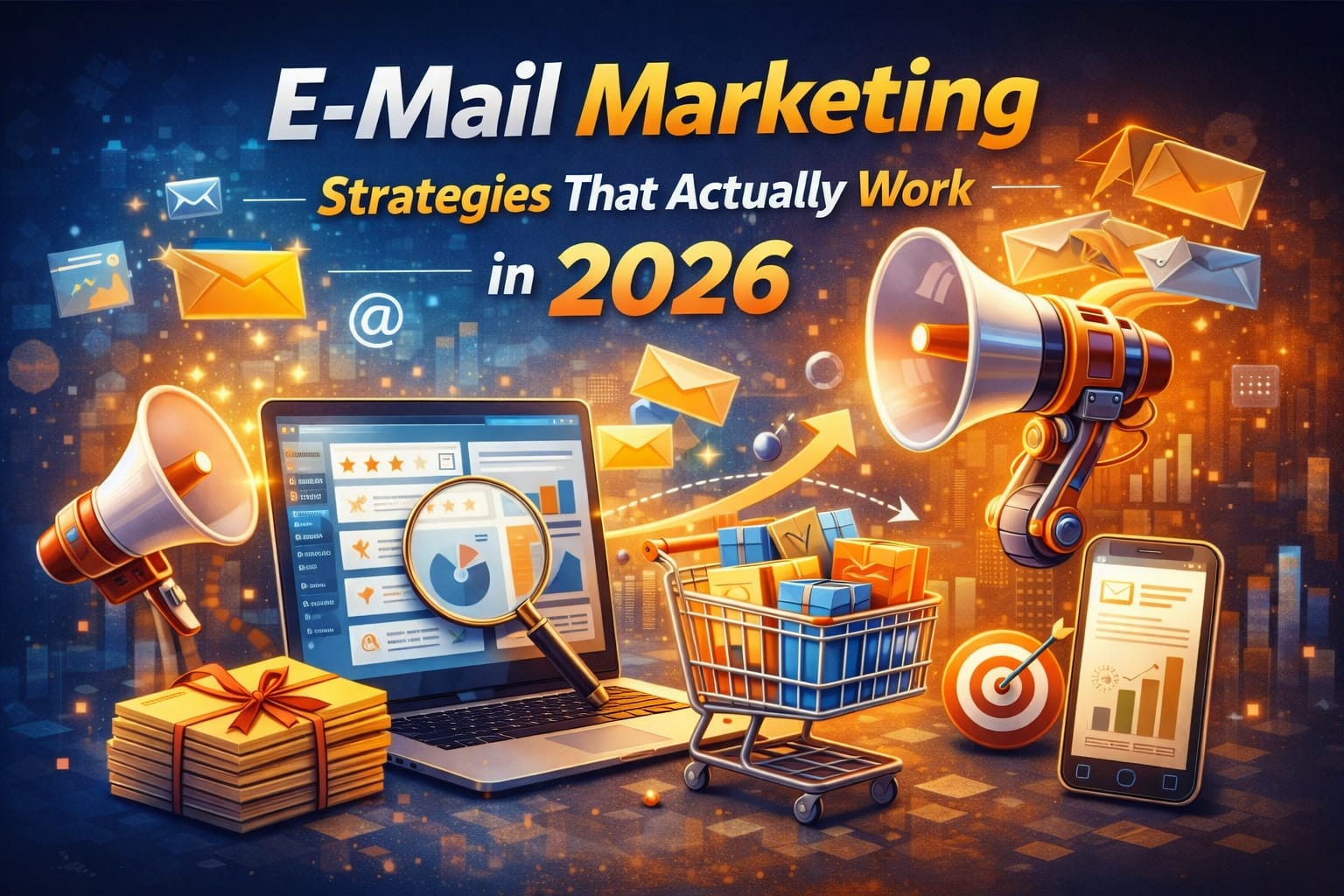
Email marketing continues to be one of the most powerful tools for businesses that want to build strong relationships with their audience. Even though new marketing channels appear every year, email remains highly effective because it allows businesses to communicate directly with potential and existing customers. When done correctly, email marketing can increase engagement, nurture leads, and drive consistent sales. In fact, when combined with techniques used to turn website visitors into paying customers, email marketing can become an even more powerful tool for growing your online business and increasing conversions.
However, the strategies that worked a few years ago may no longer produce the same results today. As consumer behavior changes and technology evolves, marketers must adapt to modern techniques. In this guide, you will learn e-mail marketing strategies that actually work in 2026 and how you can use them to improve your marketing performance.
Why Email Marketing Still Matters in 2026
Many marketers believe social media has replaced email marketing. In reality, email continues to deliver one of the highest returns on investment among digital marketing channels.
Here are several reasons email marketing remains effective:
-
It allows direct communication with your audience
-
It helps build long-term customer relationships
-
It drives repeat purchases and brand loyalty
-
It provides measurable results through analytics
Moreover, unlike social media platforms where algorithms control visibility, email gives you direct access to your audience’s inbox. Because of this, businesses that implement strong e-mail marketing strategies can maintain better control over their communication and engagement.
Build a High Quality Email List
A successful email marketing campaign always starts with a quality email list. Instead of focusing on collecting as many email addresses as possible, prioritize attracting people who are genuinely interested in your brand.
One effective way to grow your email list is by offering valuable incentives such as:
-
Free guides or eBooks
-
Discount codes
-
Exclusive content
-
Free tools or templates
When visitors receive something useful in return, they are more willing to share their email addresses. As a result, your email list will consist of subscribers who are more likely to engage with your content and become customers.
Use Personalization to Improve Engagement
Personalization has become a key element of modern email marketing. Generic emails often fail to capture attention, whereas personalized messages feel more relevant to the reader.
For example, instead of sending the same message to every subscriber, you can personalize emails by including:
-
The subscriber’s name
-
Their purchase history
-
Content based on their interests
-
Location-specific recommendations
Additionally, personalized subject lines often lead to higher open rates. When subscribers feel that the message is specifically designed for them, they are more likely to open and interact with the email.
Segment Your Email Audience
Audience segmentation is another important e-mail marketing strategy that works in 2026. Segmentation involves dividing your email list into smaller groups based on certain characteristics.
Common segmentation categories include:
-
New subscribers
-
Returning customers
-
Active users
-
Inactive subscribers
-
Purchase behavior
By sending targeted emails to each segment, you can deliver more relevant content. For example, new subscribers may receive welcome emails, while returning customers might receive product recommendations or loyalty rewards.
Because the content is more relevant, segmented campaigns typically generate higher open rates and conversions.
Focus on Valuable and Engaging Content
Email marketing should not focus only on promotions. If every email you send tries to sell something, subscribers may quickly lose interest.
Instead, provide content that offers real value to your audience. Helpful email content can include:
-
Educational tips
-
Industry insights
-
Product tutorials
-
Case studies
-
Helpful resources
When your emails consistently provide useful information, subscribers start to trust your brand. Over time, this trust increases the likelihood that they will purchase from you when you do present an offer.
Optimize Your Subject Lines
The subject line is the first thing people see when they receive your email. Therefore, it plays a major role in determining whether the email will be opened.
Effective subject lines are:
-
Clear and concise
-
Relevant to the audience
-
Curiosity-driven
-
Benefit-focused
For example:
-
“5 Email Marketing Tips That Increase Sales”
-
“Boost Your Website Traffic with This Strategy”
-
“Simple Marketing Tricks Every Business Should Know”
Additionally, avoid overly promotional language or spammy phrases, as these may cause your email to land in the spam folder.
Design Mobile Friendly Emails
A large percentage of users now check their emails on smartphones. Therefore, mobile optimization is essential for any email marketing campaign.
To create mobile-friendly emails:
-
Use short paragraphs
-
Include clear headings
-
Keep images lightweight
-
Use easily clickable buttons
When emails are easy to read on mobile devices, subscribers are more likely to stay engaged and follow through with your call-to-action.
Automate Your Email Campaigns
Automation allows businesses to send the right message at the right time without manual effort. Modern email marketing platforms offer automation tools that help streamline communication with subscribers.
Common automated email campaigns include:
-
Welcome email series
-
Abandoned cart reminders
-
Follow-up emails after purchases
-
Re-engagement campaigns for inactive users
Automation improves efficiency while ensuring that subscribers receive timely and relevant messages.
Include Clear Calls to Action
Every email should guide the reader toward a specific action. Without a clear call-to-action (CTA), subscribers may not know what to do next.
Effective CTAs include:
-
“Read the full guide”
-
“Download the free template”
-
“Start your free trial”
-
“Shop the collection”
Place your CTA in a visible position within the email. Additionally, keep the message simple so that readers clearly understand the next step.
Analyze and Improve Campaign Performance
One of the biggest advantages of email marketing is the ability to track performance metrics. Marketers can analyze data to understand what works and what needs improvement.
Important metrics to monitor include:
-
Open rates
-
Click-through rates
-
Conversion rates
-
Unsubscribe rates
By regularly reviewing these metrics, you can adjust your strategy and improve future campaigns.
Conclusion
Email marketing continues to evolve, but it remains one of the most effective ways to build relationships with customers and drive business growth. By applying modern e-mail marketing strategies, businesses can create meaningful connections with their audience and improve marketing results.
Start by building a quality email list and segmenting your audience for more targeted communication. Then focus on personalization, valuable content, and strong subject lines to increase engagement. Additionally, optimize emails for mobile devices and use automation to deliver timely messages.
When these strategies work together, your email marketing campaigns become more effective, helping you attract loyal customers and achieve long-term success in 2026 and beyond.
FAQ Section
1. What are the most effective e-mail marketing strategies in 2026?
The most effective e-mail marketing strategies include audience segmentation, personalized emails, automation campaigns, mobile-friendly design, and engaging subject lines.
2. Why is email marketing still important for businesses?
Email marketing remains important because it allows businesses to communicate directly with their audience, nurture leads, and build long-term relationships that increase sales.
3. How can businesses grow their email subscriber list?
Businesses can grow their email list by offering incentives such as free guides, discounts, exclusive content, or useful resources in exchange for email sign-ups.
4. What is email segmentation and why is it useful?
Email segmentation involves dividing your subscriber list into groups based on behavior, interests, or demographics. This helps businesses send more relevant and personalized emails.
5. How often should businesses send marketing emails?
Most businesses send emails once a week or a few times per month. The key is to maintain consistency while providing valuable content instead of sending too many promotional messages.