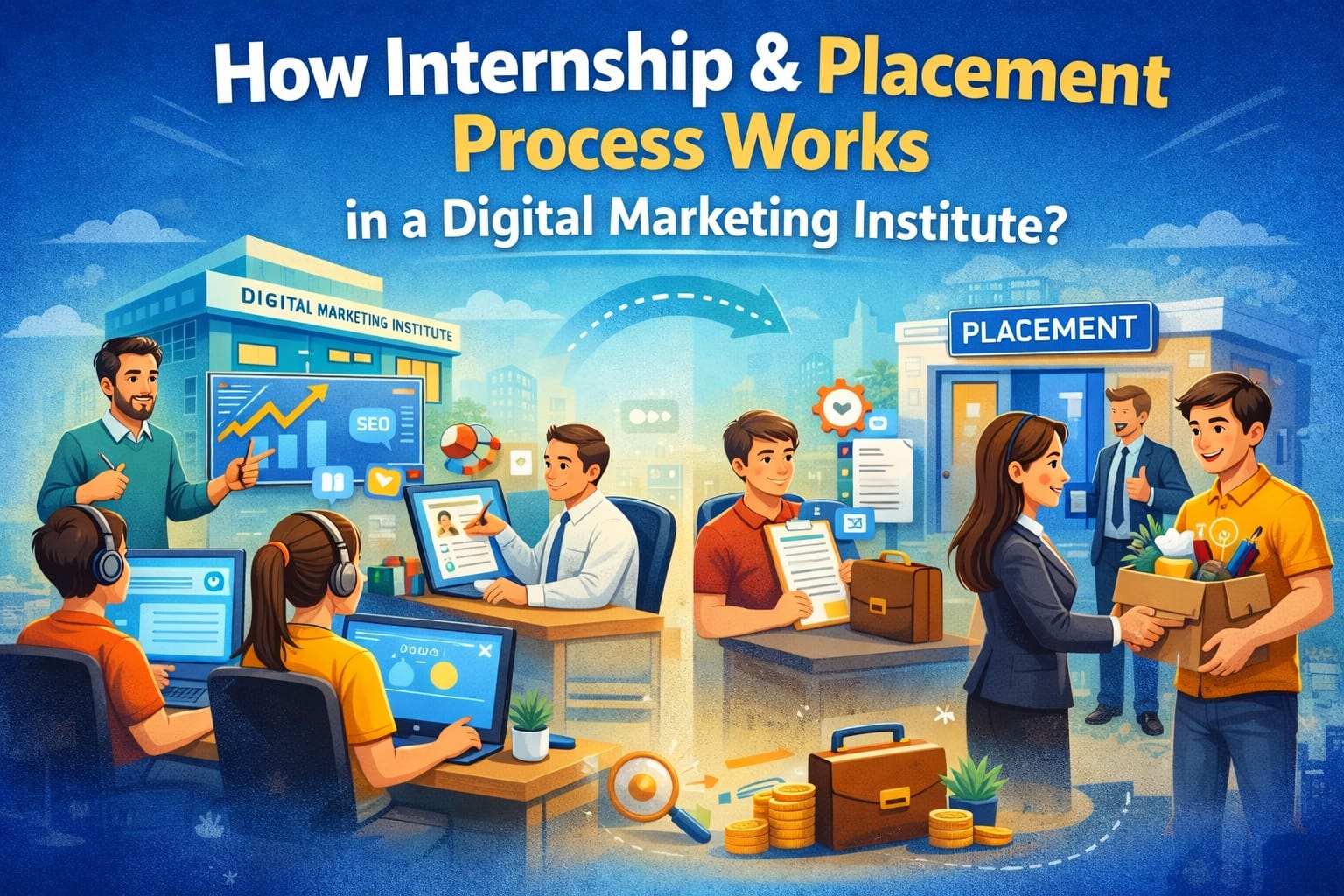
Understanding how internship & placement works in digital marketing institute is very important for students who want practical exposure and job security after completing their course. Many students enroll in an agency based digital marketing courses mainly to gain hands-on experience and secure job opportunities. If you are planning to join a course, knowing how internship & placement works in digital marketing institute will help you choose the right training center and set realistic career expectations. In this blog, we will explain how internship & placement works in digital marketing institute.
A structured system that includes internships and placement support bridges the gap between learning and employment. In this blog, we will explain the complete internship and placement process, how institutes prepare students, and what you can expect from start to finish.
Why Internship Is Important in Digital Marketing
Digital marketing is a practical field. While theoretical knowledge helps you understand concepts like SEO, social media, and paid advertising, real growth happens when you apply these skills to live projects.
An internship gives students:
-
Hands-on experience
-
Exposure to real clients
-
Understanding of deadlines and targets
-
Confidence in handling marketing tools
-
Portfolio development
Unlike traditional careers that rely heavily on degrees, this industry values practical experience and measurable results.
How Internship & Placement Work in a Digital Marketing Institute Process
Most reputed institutes follow a step-by-step system to prepare students for employment. Let’s break it down clearly.
Step 1: Skill-Based Training Before Internship
Before offering internships, institutes focus on core modules such as:
-
Search Engine Optimization (SEO)
-
Social Media Marketing
-
Pay-Per-Click Advertising
-
Content Marketing
-
Email Marketing
-
Analytics and Reporting
Students are trained on platforms like Google, Meta, Instagram, and Google Ads to gain practical exposure.
Assignments, case studies, and live projects are often included to ensure readiness before moving to the internship phase.
Step 2: Internship Program Structure
Once students complete their basic training, they enter the internship stage. This phase usually lasts between 1 to 3 months.
Types of Internship Opportunities
1. In-House Internship
Some institutes have their own marketing teams. Students work on real campaigns managed by the institute itself. They may handle social media pages, run small ad campaigns, or optimize websites.
2. Agency-Based Internship
Institutes often partner with digital agencies. Students are placed with these agencies to work on client projects, gaining exposure to multiple industries.
3. Corporate Internship
In some cases, students get opportunities to intern directly with companies looking to strengthen their online presence.
What Students Do During Internship
-
Keyword research
-
Content creation
-
Running paid campaigns
-
Monitoring analytics
-
Preparing performance reports
-
Engaging with social media communities
This practical involvement helps students understand how strategies are executed in real business environments.
Step 3: Performance Evaluation
During the internship phase, mentors evaluate students based on:
-
Task completion
-
Creativity and initiative
-
Analytical skills
-
Communication abilities
-
Team collaboration
Feedback sessions help students improve before entering the job market. Strong performance often increases placement chances.
Step 4: Placement Assistance Process
After internship completion, the placement process begins. This stage is structured to ensure students are job-ready.
Resume Building
Institutes help students create professional resumes highlighting:
-
Certifications
-
Internship experience
-
Tools mastered
-
Campaign results
-
Portfolio links
A strong resume increases interview shortlisting chances.
Mock Interviews & Soft Skills Training
Communication plays a key role in securing a job. Many institutes conduct:
-
Mock interviews
-
HR interview preparation
-
Technical question practice
-
Personality development sessions
These sessions prepare students for real hiring scenarios.
Interview Scheduling with Hiring Companies
Institutes typically have tie-ups with:
-
Digital marketing agencies
-
Startups
-
E-commerce businesses
-
IT companies
-
Media firms
They forward shortlisted resumes and schedule interviews for eligible candidates.
Some companies directly visit institutes for campus hiring drives.
Placement Guarantee vs Placement Assistance
It’s important to understand the difference.
Placement Assistance
Most institutes offer assistance, meaning they help connect students with recruiters but do not guarantee a job.
Placement Guarantee
Some institutes advertise guaranteed placement, usually tied to:
-
Minimum attendance
-
Successful course completion
-
Internship performance
-
Passing assessments
Students should carefully read terms and conditions before enrolling.
Factors That Affect Internship & Placement Success
Even with strong institutional support, student performance matters greatly.
Skill Level
Practical expertise in SEO, paid ads, and analytics improves job prospects.
Communication Skills
Confidence during interviews increases selection chances.
Portfolio Quality
A well-documented portfolio showcasing live campaigns adds credibility.
Continuous Learning
The digital world evolves rapidly. Students who stay updated with trends stand out from others.
Benefits of a Structured Internship & Placement System
When the process is organized properly, students gain:
-
Real industry exposure
-
Networking opportunities
-
Job interview confidence
-
Faster career start
-
Higher employability
A well-managed internship and placement framework reduces the gap between training and employment.
How to Choose the Right Institute
Before enrolling, check:
-
Internship duration and type
-
Placement record
-
Industry partnerships
-
Trainer experience
-
Alumni reviews
-
Practical exposure level
Avoid institutes that focus only on theory without real project work.
Final Thoughts
Understanding how internship & placement work in a digital marketing institute process helps students make informed career decisions. The journey typically starts with skill-based training, moves into practical internship experience, and ends with structured placement support.
Internships provide real-world exposure, while placement assistance connects students with hiring companies. However, personal effort, skill development, and continuous learning remain the key drivers of success.
If you choose the right institute and actively participate in the internship and placement process, you can confidently step into the digital marketing industry with both knowledge and experience — giving your career a strong and competitive start.