Search engine optimization continues to evolve every year. As search engines become smarter, website owners must adapt their strategies to stay visible online. If you want your website to rank higher and attract consistent organic traffic, you need to focus on modern SEO techniques rather than outdated tactics. One important yet often overlooked strategy is SEO image optimization, which helps search engines understand your images while improving page speed and user experience. By optimizing image file names, using descriptive alt text, and compressing images for faster loading, you can improve both your website’s accessibility and its chances of ranking higher in search results.
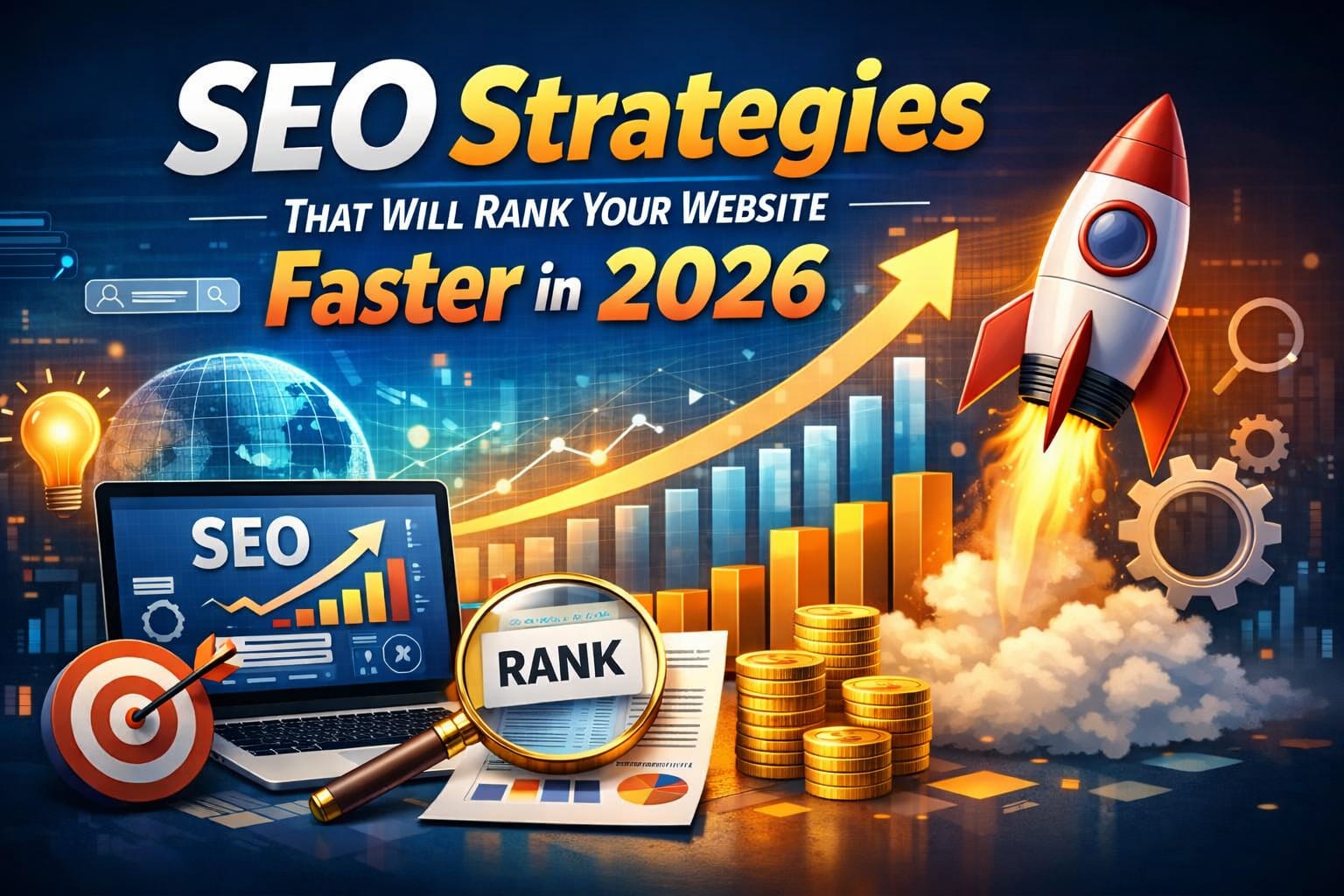
In this guide, you will learn the most effective SEO strategies that will rank your website faster in 2026. These strategies are practical, beginner-friendly, and suitable for bloggers, marketers, and business owners.
Why SEO Is Still Important in 2026
Even with the growth of social media and paid advertising, SEO remains one of the most powerful digital marketing strategies. It helps websites attract long-term traffic without constantly spending money on ads.
Here are a few reasons why SEO matters more than ever:
-
Most online experiences begin with a search engine.
-
Organic traffic has higher trust and credibility.
-
SEO drives consistent long-term traffic.
-
High rankings increase brand authority.
Therefore, if your website appears on the first page of search results, you have a much better chance of gaining visitors, leads, and customers.
1. Focus on Search Intent
One of the most important SEO strategies that will rank your website faster is understanding search intent. Search intent refers to the reason behind a user’s search query.
Google now prioritizes content that directly answers what users are looking for. Because of this, simply inserting keywords into your article is no longer enough.
There are four main types of search intent:
-
Informational: Users want to learn something
-
Navigational: Users are searching for a specific website
-
Commercial: Users are comparing products or services
-
Transactional: Users want to make a purchase
For example, someone searching for “SEO strategies that will rank your website” is likely looking for actionable tips. Therefore, your content should provide clear guidance, practical steps, and real value.
2. Use Keyword Research the Right Way
Keyword research remains the foundation of effective SEO. However, the strategy has changed in recent years. Instead of targeting only high-volume keywords, focus on long-tail keywords with lower competition.
Long-tail keywords are longer phrases that match specific search queries. These keywords usually convert better because they target a more precise audience.
For example:
-
SEO strategies will rank your website
-
advanced SEO strategies for beginners
-
how to rank a website faster in Google
Additionally, place your target keyword naturally in important areas such as:
-
Title
-
URL
-
First paragraph
-
Headings
-
Meta description
However, avoid keyword stuffing. Instead, write naturally and prioritize readability.
3. Create High Quality and Helpful Content
Content quality plays a major role in search rankings. Google prioritizes websites that provide valuable, informative, and user-focused content.
To create high quality SEO content:
-
Write clear and easy-to-read paragraphs
-
Use headings and subheadings for better structure
-
Provide real examples and actionable tips
-
Answer common questions related to the topic
Moreover, longer content often performs better in search results because it covers topics in more depth. Articles between 900 and 1500 words tend to perform well for informational topics.
However, quality always matters more than length. If your content solves a user’s problem, it will naturally perform better.
4. Improve Website Page Speed
Website speed is another critical ranking factor. If your website loads slowly, visitors may leave before reading your content. As a result, your bounce rate increases, which negatively affects SEO.
To improve page speed:
-
Compress images and use WebP format
-
Use a fast hosting provider
-
Enable browser caching
-
Minimize unnecessary plugins
-
Use a lightweight website theme
A faster website not only improves rankings but also enhances user experience.
5. Optimize for Mobile Users
More than half of all internet searches now happen on mobile devices. Because of this trend, Google uses mobile-first indexing, which means it primarily evaluates the mobile version of your website.
Therefore, make sure your website is fully mobile-friendly.
Important mobile optimization tips include:
-
Responsive design
-
Easy-to-read font sizes
-
Fast loading speed
-
Proper spacing between buttons and links
When users can easily navigate your website on their smartphones, they stay longer and engage more with your content.
6. Build High Quality Backlinks
Backlinks remain one of the strongest ranking signals in SEO. A backlink occurs when another website links to your content.
Search engines consider backlinks as votes of trust. The more high-quality backlinks your website has, the more authority it gains.
Some effective backlink strategies include:
-
Guest posting on relevant blogs
-
Creating shareable content
-
Writing data-driven articles
-
Building relationships with industry websites
However, avoid spammy backlinks or low-quality link schemes. These tactics can harm your website’s reputation.
7. Use Internal Linking
Internal linking is a simple but powerful SEO strategy. It involves linking one page of your website to another related page.
Internal links help search engines understand the structure of your website. At the same time, they encourage visitors to explore more content.
For example, if you write about SEO strategies, you can link to related topics such as:
-
digital marketing strategies
-
content marketing tips
-
keyword research guides
As a result, internal linking improves both SEO performance and user engagement.
8. Optimize for Featured Snippets
Featured snippets appear at the top of search results and provide quick answers to user queries. Ranking in this position can significantly increase website traffic.
To optimize for featured snippets:
-
Answer questions clearly
-
Use numbered lists or bullet points
-
Add FAQ sections
-
Structure content with headings
When your content directly answers common questions, it has a higher chance of appearing in the featured snippet section.
9. Update Content Regularly
SEO is not a one-time process. Search engines prefer fresh and updated content.
Therefore, review your articles regularly and update them with:
-
New information
-
Updated statistics
-
Additional sections
-
Improved keywords
Updating old content can often boost rankings faster than creating new posts.
Conclusion
SEO continues to evolve, but the goal remains the same: helping users find useful information quickly. By applying the right techniques, you can improve your rankings and drive consistent traffic to your website.
The most effective SEO strategies that will rank your website faster in 2026 include understanding search intent, performing smart keyword research, creating high-quality content, improving website speed, and building strong backlinks.
In addition, focusing on mobile optimization, internal linking, and regular content updates will further strengthen your SEO performance. When these strategies work together, your website gains higher visibility and better long-term growth in search results.
FAQ Section
1. What are the best SEO strategies to rank a website faster?
The best SEO strategies include keyword research, creating high quality content, optimizing page speed, building quality backlinks, improving mobile experience, and using internal linking.
2. How long does SEO take to rank a website?
SEO usually takes 3 to 6 months to show noticeable results. However, websites with strong content and proper optimization may see improvements sooner.
3. Why is keyword research important for SEO?
Keyword research helps you understand what users are searching for online. By targeting the right keywords, your website content becomes more relevant and easier for search engines to rank.
4. Does website speed affect SEO rankings?
Yes, website speed is a major ranking factor. Faster websites improve user experience and reduce bounce rates, which helps search engines rank the site higher.
5. What is the role of backlinks in SEO?
Backlinks act as signals of trust from other websites. High-quality backlinks increase domain authority and improve your website’s chances of ranking higher in search results.