
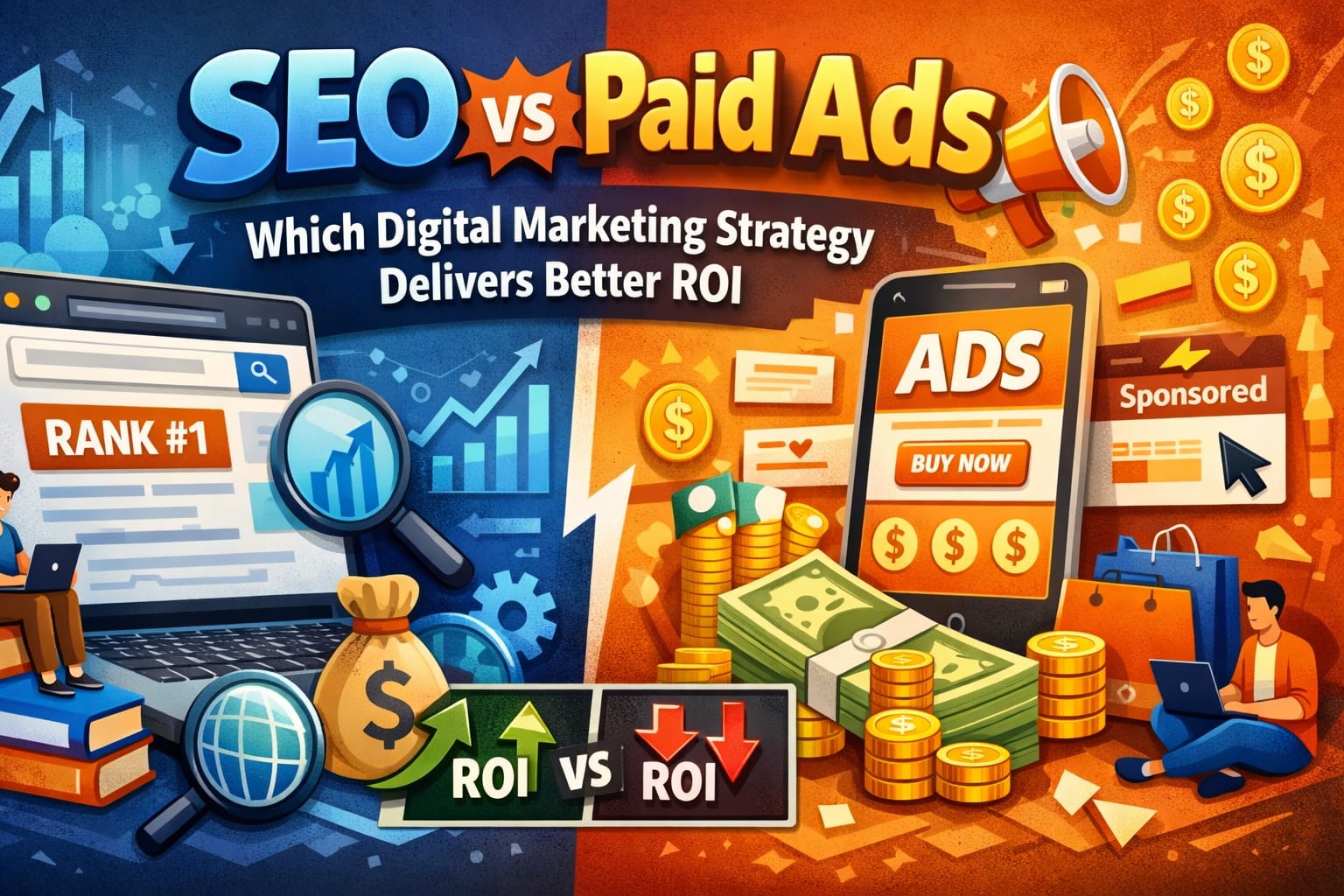
In today’s competitive online landscape, businesses constantly look for the most effective ways to attract customers and maximize returns. Two of the most powerful strategies are search engine optimization (SEO) and paid advertising. But when it comes to SEO vs. Paid Ads, which one truly delivers better ROI? More importantly, businesses must also focus on how to turn website visitors into paying customers to ensure that the traffic generated actually leads to measurable revenue.
The answer isn’t as simple as choosing one over the other. Both strategies have unique advantages, and the best choice depends on your business goals, budget, and timeline. In this article, we’ll break down the differences, benefits, and ROI potential of each to help you make the right decision.
What is SEO?
Search Engine Optimization (SEO) focuses on improving your website’s visibility in organic (non-paid) search results. When users search for relevant keywords, your goal is to appear on the first page of search engines like Google.
SEO involves:
- Keyword research
- Content creation
- On-page optimization
- Technical improvements
- Backlink building
The main advantage of SEO is that it generates long-term, sustainable traffic without paying for each click.
What are Paid Ads?
Paid advertising, often called Pay-Per-Click (PPC), allows businesses to display ads on search engines, social media platforms, and websites. You pay each time someone clicks on your ad.
Popular paid ad platforms include:
- Google Ads
- Facebook Ads
- Instagram Ads
- LinkedIn Ads
Paid ads provide instant visibility and allow precise targeting based on demographics, interests, and behavior.
SEO vs. Paid Ads: Key Differences
Understanding the differences between SEO and paid ads is essential when deciding where to invest your resources.
1. Time to Results
SEO takes time. It may take several months to see significant results, especially for competitive keywords. However, once you rank, you can enjoy consistent traffic.
Paid ads, on the other hand, deliver immediate results. As soon as your campaign goes live, your ads start appearing.
👉 If you need quick results, paid ads are the better choice.
👉 If you want long-term growth, SEO is more effective.
2. Cost and Investment
SEO requires an upfront investment in content, tools, and expertise. However, once your content ranks, you don’t pay for clicks.
Paid ads require continuous spending. The moment you stop paying, your traffic disappears.
👉 SEO offers better long-term ROI.
👉 Paid ads offer faster but short-term returns.
3. Credibility and Trust
Users tend to trust organic results more than ads. Ranking high in search results builds credibility and authority.
Paid ads, while effective, are clearly labeled as “sponsored,” which can reduce trust for some users.
👉 SEO builds brand trust over time.
👉 Paid ads focus more on visibility than trust.
4. Targeting Capabilities
Paid ads provide advanced targeting options. You can reach specific audiences based on location, age, interests, and behavior.
SEO targets users based on search intent. While it’s powerful, it doesn’t offer the same level of precision as paid ads.
👉 Paid ads excel in targeting.
👉 SEO excels in capturing intent.
5. Scalability
Scaling SEO takes time and effort. You need to create more content, build backlinks, and optimize continuously.
Paid ads are easier to scale. You can increase your budget and expand your reach instantly.
👉 Paid ads scale quickly.
👉 SEO scales gradually but sustainably.
ROI Comparison: SEO vs. Paid Ads
When comparing SEO vs. Paid Ads, ROI depends on how you define success.
SEO ROI
SEO delivers strong ROI over time because:
- Traffic is free after ranking
- Content keeps generating leads
- Brand authority increases
However, it requires patience and consistent effort.
Paid Ads ROI
Paid ads deliver ROI quickly because:
- You get immediate traffic
- Campaigns are measurable
- You can optimize in real time
But costs can rise quickly, especially in competitive industries.
When Should You Choose SEO?
SEO is the best choice when:
- You want long-term growth
- You have time to build authority
- You want to reduce dependency on ads
- You focus on content marketing
SEO is ideal for businesses that aim to build a strong online presence over time.
When Should You Choose Paid Ads?
Paid ads are the right choice when:
- You need immediate results
- You’re launching a new product or service
- You have a flexible budget
- You want precise audience targeting
Paid ads work well for short-term campaigns and quick conversions.
The Best Strategy: Combine SEO and Paid Ads
Instead of choosing between SEO and paid ads, the most effective approach is to combine both.
Here’s how you can do it:
- Use paid ads for quick traffic and testing keywords
- Use SEO to build long-term organic visibility
- Retarget users through paid campaigns
- Optimize content based on ad performance
This hybrid strategy allows you to maximize ROI while balancing short-term and long-term goals.
Common Mistakes to Avoid
When comparing SEO vs. Paid Ads, many businesses make these mistakes:
- Expecting instant results from SEO
- Ignoring SEO completely in favor of ads
- Overspending on ads without optimization
- Not tracking performance metrics
Avoiding these mistakes will help you get better results from both strategies.
Future Trends in SEO and Paid Ads
As digital marketing evolves, both SEO and paid ads are becoming more advanced.
Key trends include:
- AI-driven search algorithms
- Voice search optimization
- Automation in ad campaigns
- Personalized user experiences
Businesses that stay updated with these trends will gain a competitive edge.
Conclusion
The debate between SEO vs. Paid Ads doesn’t have a one-size-fits-all answer. Both strategies offer unique benefits and play important roles in digital marketing.
SEO is a long-term investment that builds credibility and sustainable traffic. Paid ads provide immediate visibility and quick results. The best approach is to use both strategically.
If you want consistent growth and maximum ROI, start with a balanced strategy that leverages the strengths of both SEO and paid advertising.
FAQ Section
❓ What is the main difference between SEO and paid ads?
SEO focuses on organic traffic through search engine rankings, while paid ads generate traffic by paying for ad placements on platforms like Google and social media.
❓ Which is better for long-term ROI: SEO or paid ads?
SEO typically delivers better long-term ROI because it generates consistent traffic without ongoing costs per click, while paid ads require continuous spending.
❓ Are paid ads better for quick results?
Yes, paid ads provide immediate visibility and traffic, making them ideal for short-term campaigns, product launches, or promotions.
❓ Can SEO and paid ads work together?
Absolutely. Combining SEO and paid ads helps businesses achieve both short-term results and long-term growth by balancing instant traffic with sustainable visibility.
❓ How much should I invest in SEO vs. paid ads?
It depends on your goals. Businesses often start with paid ads for quick wins while investing in SEO for long-term growth and reduced dependency on ads.
❓ Do paid ads affect SEO rankings?
No, paid ads do not directly impact SEO rankings. However, they can increase visibility and traffic, which may indirectly support brand awareness.