
If you want consistent SEO growth., publishing random blog posts is not enough. Search engines no longer reward scattered content. They reward structure, depth, and topical authority which is why building a strategic content framework is essential for long-term SEO growth and higher search rankings.
A pillar page helps you organize your content into a powerful structure that improves rankings, strengthens internal linking, and builds authority in your niche. Instead of competing with hundreds of weak articles, you create a strong content ecosystem that supports long-term organic traffic.
In this detailed guide, you will learn exactly how to build a pillar page strategy for sustainable SEO growth.
What Is a Pillar Page?
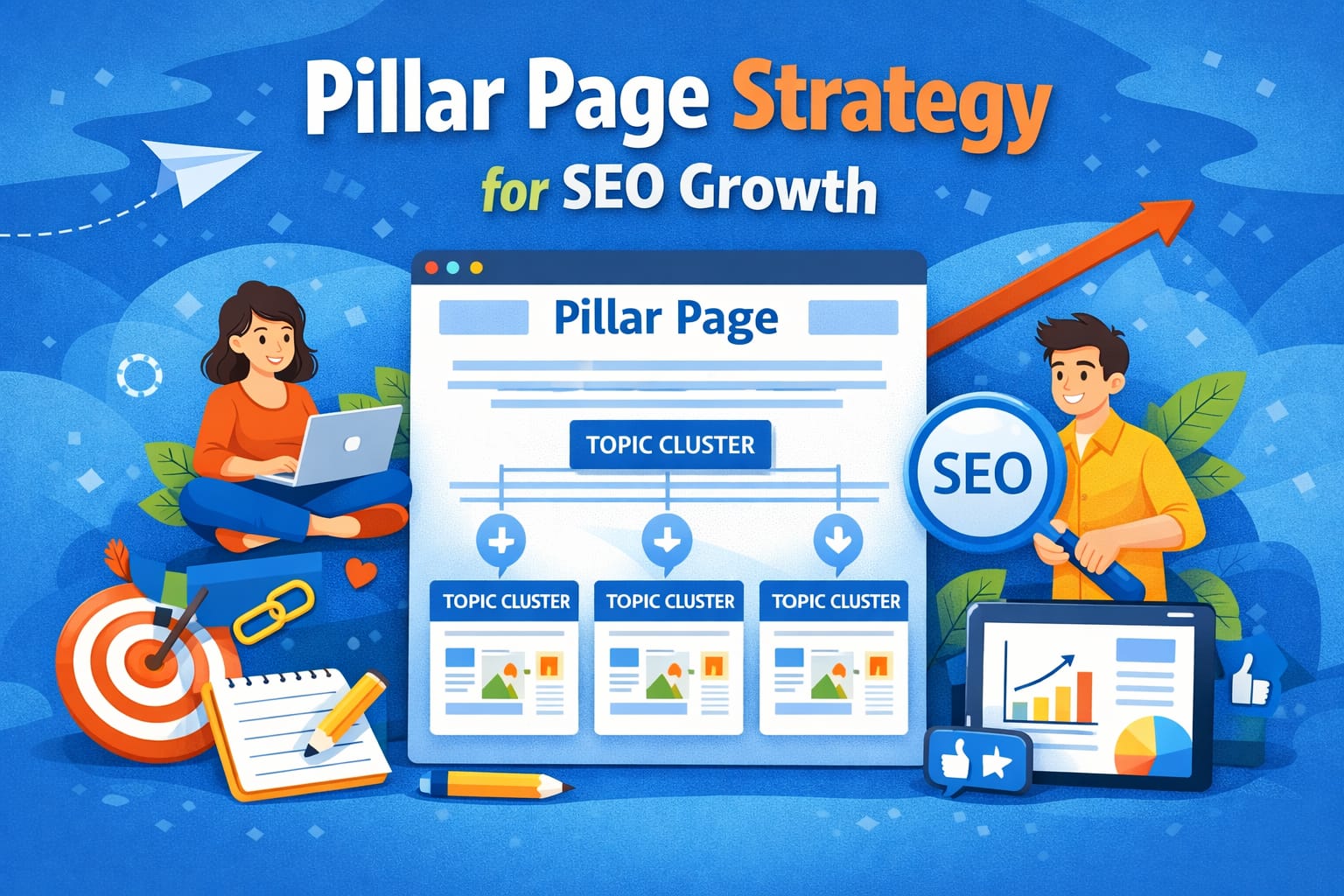
A pillar page is a comprehensive, in-depth piece of content that covers a broad topic and links to related, more detailed blog posts (called cluster content).
Think of it as the “main hub” of a topic.
For example:
Pillar Topic: Content Marketing
Cluster Articles:
-
How to Create a Content Calendar
-
Keyword Research for Beginners
-
Blogging Strategy Guide
-
Content Repurposing Tips
The pillar page provides a complete overview, while cluster articles dive deeper into specific subtopics.
Together, they form a topic cluster.
Why Pillar Pages Drive SEO Growth
Search engines like Google prioritize topical authority. When your website covers a subject in depth, it signals expertise.
Here’s how pillar pages boost SEO growth:
1. Improve Internal Linking Structure
A pillar page links to all related articles. Those articles link back to the pillar page. This creates a strong internal linking network that improves crawlability and ranking potential.
2. Build Topical Authority
Instead of writing unrelated content, you cover one topic comprehensively. Search engines recognize your site as an authority in that are
3. Increase Time on Site
Users find multiple related articles easily. They spend more time exploring your website.
4. Rank for Competitive Keywords
Pillar pages target broader, high-volume keywords, while cluster posts rank for long-tail keywords. This combination accelerates SEO growth.
Pillar Page vs Regular Blog Post
Many beginners confuse pillar pages with long blog posts.
Here’s the difference:
Regular blog post:
-
Focuses on one specific question
-
Targets a long-tail keyword
-
800–1500 words
Pillar page:
-
Covers an entire topic
-
Links to multiple related articles
-
2500–4000+ words
-
Targets broad competitive keywords
A pillar page acts as your foundation.
Step 1: Choose the Right Pillar Topic
Your pillar topic should:
-
Be broad but focused
-
Have strong search demand
-
Support multiple subtopics
-
Align with your business goals
Examples for a digital marketing blog:
-
SEO Growth
-
Content Marketing
-
Social Media Marketing
-
Email Marketing
-
Digital Marketing Strategy
If your goal is long-term SEO growth, choose topics that allow you to create 8–15 supporting articles.
Step 2: Perform Keyword Research Strategically
Start with your broad keyword (for example, SEO growth).
Then find:
-
Long-tail variations
-
Related questions
-
Supporting subtopics
-
Low-competition keywords
Group them logically.
Example structure:
Pillar: SEO Growth
Clusters:
-
How to Improve SEO Rankings
-
On-Page SEO Checklist
-
Technical SEO Basics
-
Keyword Research Guide
-
Link Building Strategy
-
Content Clusters Explained
This keyword grouping creates a clear content roadmap.
Step 3: Create Your Pillar Page Structure
Your pillar page must be comprehensive and well-organized.
Include:
-
H1 with primary keyword
-
Clear introduction
-
Multiple H2 sections covering subtopics
-
Short paragraphs
-
Bullet points
-
Visual examples (if possible)
-
Internal links to cluster articles
-
Clear navigation structure
Your goal is to make the pillar page easy to read and easy to explore.
Step 4: Create Supporting Cluster Content
Each cluster article should:
-
Target one specific subtopic
-
Link back to the pillar page
-
Provide deeper, actionable guidance
-
Be SEO optimized
Example:
Inside your “Keyword Research Guide,” add:
“For a complete roadmap on building sustainable SEO growth, read our detailed pillar guide.”
This backlink strengthens your content ecosystem.
Step 5: Optimize Internal Linking
Internal linking is the engine behind pillar page strategy.
Follow this structure:
-
Pillar → Links to all clusters
-
Cluster → Links back to pillar
-
Cluster → Links to related clusters (when relevant)
Avoid random linking. Keep it strategic.
This structure helps search engines understand your content hierarchy.
Step 6: Update and Expand Over Time
SEO growth requires ongoing improvement.
Every 3–6 months:
-
Add new subtopics
-
Update outdated statistics
-
Improve headings
-
Optimize for featured snippets
-
Strengthen internal linking
A pillar page is not a one-time project. It evolves with your website.
Common Mistakes to Avoid
Avoid these beginner errors:
-
Choosing a topic that is too narrow
-
Not creating enough cluster articles
-
Ignoring internal linking
-
Writing thin content
-
Not updating pillar pages
-
Targeting keywords without search intent
Your strategy must be structured and intentional.
How Long Does Pillar Page Strategy Take to Show Results?
SEO growth does not happen overnight.
Typical timeline:
-
1–2 months: Improved structure
-
3–6 months: Increased rankings for cluster posts
-
6–12 months: Strong authority and organic traffic growth
Consistency, optimization, and content depth determine success speed.
Tools to Build a Pillar Page Strategy
Here are useful tools:
-
Google Search Console
-
Keyword research tools
-
Content planning tools (Notion, Trello, Sheets)
-
SEO audit tools
-
Analytics tracking software
Start simple. Focus on execution rather than perfection.
Real Example of a Pillar Page Strategy
Let’s say you run a digital marketing blog.
You create:
Pillar Page: Complete Guide to SEO Growth
Then you publish:
-
On-Page SEO Checklist
-
Technical SEO Guide
-
Keyword Research Strategy
-
Link Building Techniques
-
Content Marketing for SEO
-
Website Speed Optimization
Each article strengthens the pillar.
Over time, search engines see your website as an authority in SEO growth.
Why Pillar Pages Are the Future of SEO
Search engines now prioritize:
-
Helpful content
-
Topical depth
-
Structured information
Pillar page strategy aligns perfectly with these ranking factors.
Instead of chasing trends, you build a solid content foundation.
Final Thoughts
If you truly want long-term SEO growth, stop publishing disconnected blog posts.
Start building structured content clusters around strong pillar pages.
When you:
-
Choose the right topic
-
Perform strategic keyword research
-
Create in-depth content
-
Optimize internal linking
-
Update consistently
You create a system that drives sustainable organic traffic.
Pillar page strategy is not a shortcut. It is a long-term investment in authority, visibility, and growth.
FAQ’s Section
1. What is a pillar page in SEO?
A pillar page is a comprehensive guide that covers a broad topic and links to detailed cluster articles. It helps organize content and improve SEO growth through structured internal linking.
2. How does a pillar page improve SEO growth?
A pillar page improves SEO growth by building topical authority, strengthening internal links, improving crawlability, and targeting both broad and long-tail keywords.
3. How many cluster posts should support a pillar page?
Ideally, a pillar page should have 8–15 cluster articles targeting related subtopics to maximize authority and ranking potential.
4. How long should a pillar page be?
A pillar page typically ranges from 2,500 to 4,000 words depending on the topic depth and competition.
5. How long does it take to see results from pillar page strategy?
Most websites see noticeable SEO growth within 3–6 months if they consistently publish cluster content and optimize internal linking.


