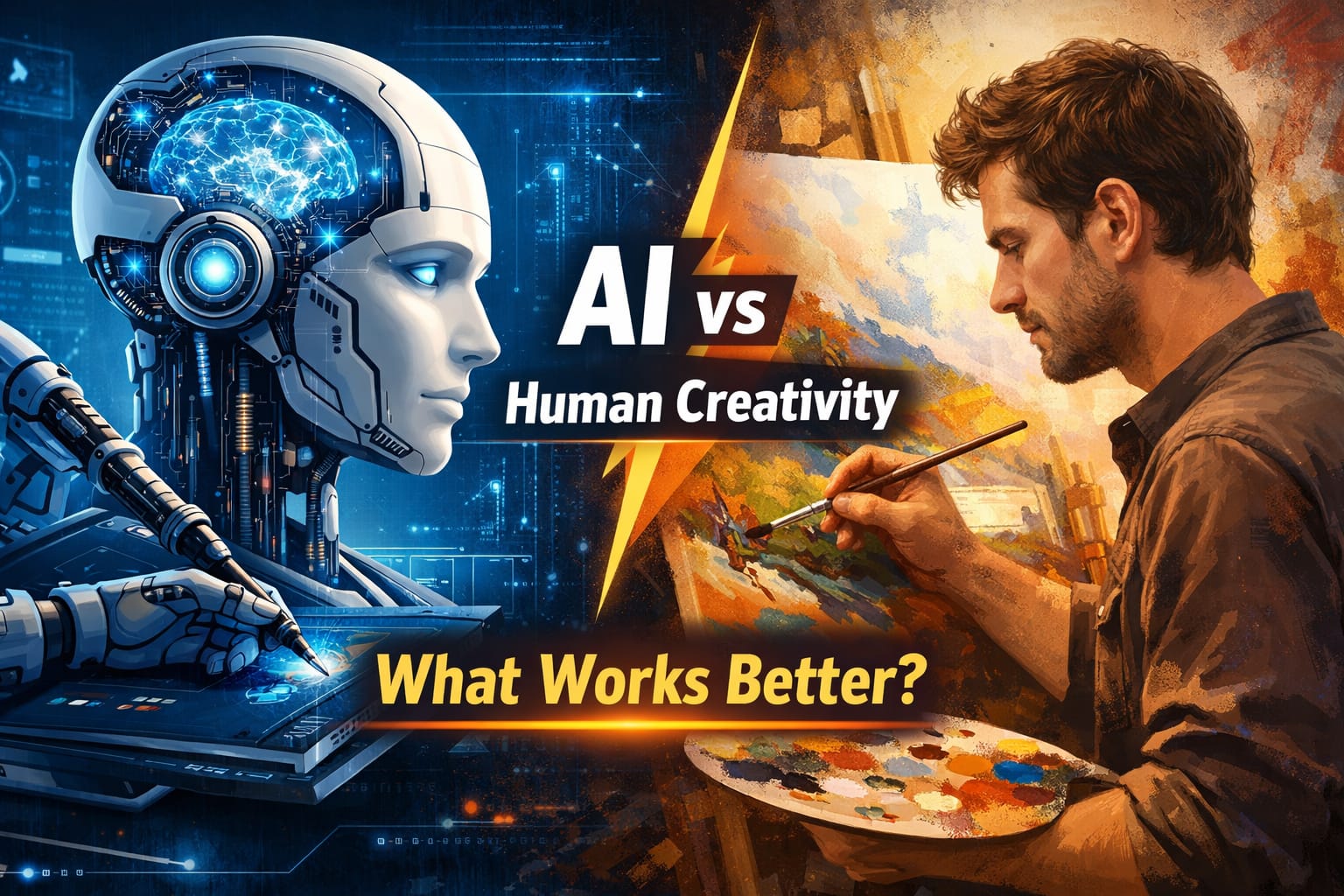
Digital marketing is evolving rapidly, and artificial intelligence (AI) is playing a bigger role than ever before. From content generation to data analysis, AI tools help marketers work faster and more efficiently. Many businesses are now learning how to use AI for content marketing strategy to create blog posts, social media content, and personalized campaigns more effectively. However, creativity has always been the heart of marketing, and human imagination still drives powerful brand stories and emotional connections.
The truth is that both have unique strengths. While AI improves speed and data-driven decision-making, human creativity brings originality, emotion, and strategic thinking. In this article, we will explore how AI and human creativity work in marketing, their advantages, limitations, and how businesses can combine both for better results.
Understanding AI in Marketing
Artificial intelligence refers to technology that can perform tasks that normally require human intelligence. In marketing, AI tools can analyze large amounts of data, generate content, personalize campaigns, and automate repetitive tasks.
Today, many businesses use AI for tasks such as:
-
Content creation and blog writing
-
Social media scheduling
-
Customer behavior analysis
-
Email marketing automation
-
Chatbots for customer support
-
Predictive marketing strategies
AI helps marketers save time and make decisions based on data rather than guesswork.
Benefits of AI in Marketing
1. Speed and Efficiency
AI can generate marketing content in seconds. It can also analyze large datasets quickly, helping businesses understand customer behavior and market trends.
2. Data-Driven Insights
AI tools analyze customer data to identify patterns and trends. This helps marketers create campaigns that are more targeted and effective.
3. Personalization at Scale
AI allows businesses to deliver personalized recommendations, emails, and advertisements to thousands of customers simultaneously.
4. Automation of Repetitive Tasks
Tasks like scheduling social media posts, responding to common customer queries, and generating reports can be automated using AI tools.
Limitations of AI in Marketing
Despite its advantages, AI still has several limitations.
1. Lack of Emotional Intelligence
AI cannot truly understand human emotions. It generates responses based on data and patterns rather than real feelings or experiences.
2. Limited Creativity
AI produces content based on existing information. It cannot create completely original ideas or think outside the box like humans.
3. Risk of Generic Content
If many businesses use the same AI tools, marketing content can become repetitive and less unique.
4. Dependence on Data
AI works best when it has large datasets. Without proper data, AI-generated insights may not be accurate.
The Power of Human Creativity in Marketing
Human creativity is the ability to generate original ideas, tell compelling stories, and build emotional connections with audiences. Successful marketing campaigns often rely on creative thinking and deep understanding of human behavior.
Humans can interpret cultural trends, emotions, humor, and social context in ways that AI cannot fully replicate.
Advantages of Human Creativity
1. Emotional Connection
Great marketing connects with people emotionally. Humans can create stories, messages, and campaigns that resonate deeply with audiences.
2. Original Ideas
Humans can think creatively and develop unique campaign concepts that stand out in crowded markets.
3. Strategic Thinking
Marketers use experience, intuition, and market knowledge to develop long-term strategies that go beyond data.
4. Brand Voice and Personality
A strong brand voice requires personality and authenticity. Human writers and marketers are better at maintaining this consistency.
Limitations of Human Creativity
While human creativity is powerful, it also has some challenges.
1. Time-Consuming
Creating high-quality marketing content takes time. Research, brainstorming, writing, and editing require significant effort.
2. Limited Data Processing
Humans cannot analyze large amounts of data as quickly as AI tools.
3. Higher Costs
Hiring skilled marketers, designers, and content creators can be expensive for businesses.
AI vs Human Creativity: Key Differences
Here is a simple comparison to understand how AI vs human creativity differs in marketing.
| Factor | AI | Human Creativity |
|---|---|---|
| Speed | Very fast | Slower |
| Data analysis | Excellent | Limited |
| Original ideas | Limited | Highly creative |
| Emotional understanding | Weak | Strong |
| Automation | Excellent | Limited |
| Storytelling | Basic | Powerful |
This comparison shows that both AI and humans play different but valuable roles in marketing.
Why AI Cannot Replace Human Creativity
Although AI is becoming more advanced, it still cannot fully replace human creativity. Marketing is not only about data and automation; it is also about storytelling, emotions, and cultural understanding.
Successful campaigns often involve creativity that breaks traditional rules and surprises audiences. These types of ideas usually come from human imagination rather than algorithms.
For example, viral marketing campaigns, brand storytelling, and emotional advertisements rely heavily on human creativity.
The Future of Marketing: Collaboration Between AI and Humans
Instead of choosing between AI vs human creativity, the most effective strategy is to combine both.
AI can handle repetitive and data-heavy tasks, allowing marketers to focus more on creativity and strategy.
How Businesses Can Use AI and Human Creativity Together
1. Use AI for Research and Insights
AI tools can analyze market trends, keywords, and customer behavior to provide useful insights.
2. Let Humans Develop Creative Ideas
Marketers can use these insights to develop creative campaigns that connect with audiences.
3. Use AI for Content Assistance
AI can help generate outlines, ideas, and drafts, while human writers refine and improve the content.
4. Automate Marketing Processes
Businesses can automate tasks like email marketing and analytics while maintaining human oversight.
This collaboration improves productivity and creates better marketing results.
Real Examples of AI and Human Collaboration
Many successful companies already combine AI technology with human creativity.
For instance:
-
AI analyzes customer behavior and suggests personalized product recommendations.
-
Human marketers design creative advertising campaigns using those insights.
-
AI tools optimize ad performance and targeting.
-
Human teams refine messaging and storytelling.
This approach helps brands deliver smarter and more engaging marketing experiences.
Conclusion
The debate about AI vs human creativity in marketing often creates the impression that one must replace the other. In reality, both are essential for modern marketing success.
AI provides speed, automation, and powerful data analysis, helping marketers work more efficiently. Human creativity, on the other hand, brings originality, emotional intelligence, and storytelling that truly connects with audiences.
The future of digital marketing lies in combining these strengths. Businesses that use AI as a supportive tool while allowing human creativity to lead strategy and innovation will achieve the best results.
By balancing technology with creativity, marketers can create campaigns that are not only efficient but also meaningful and memorable.