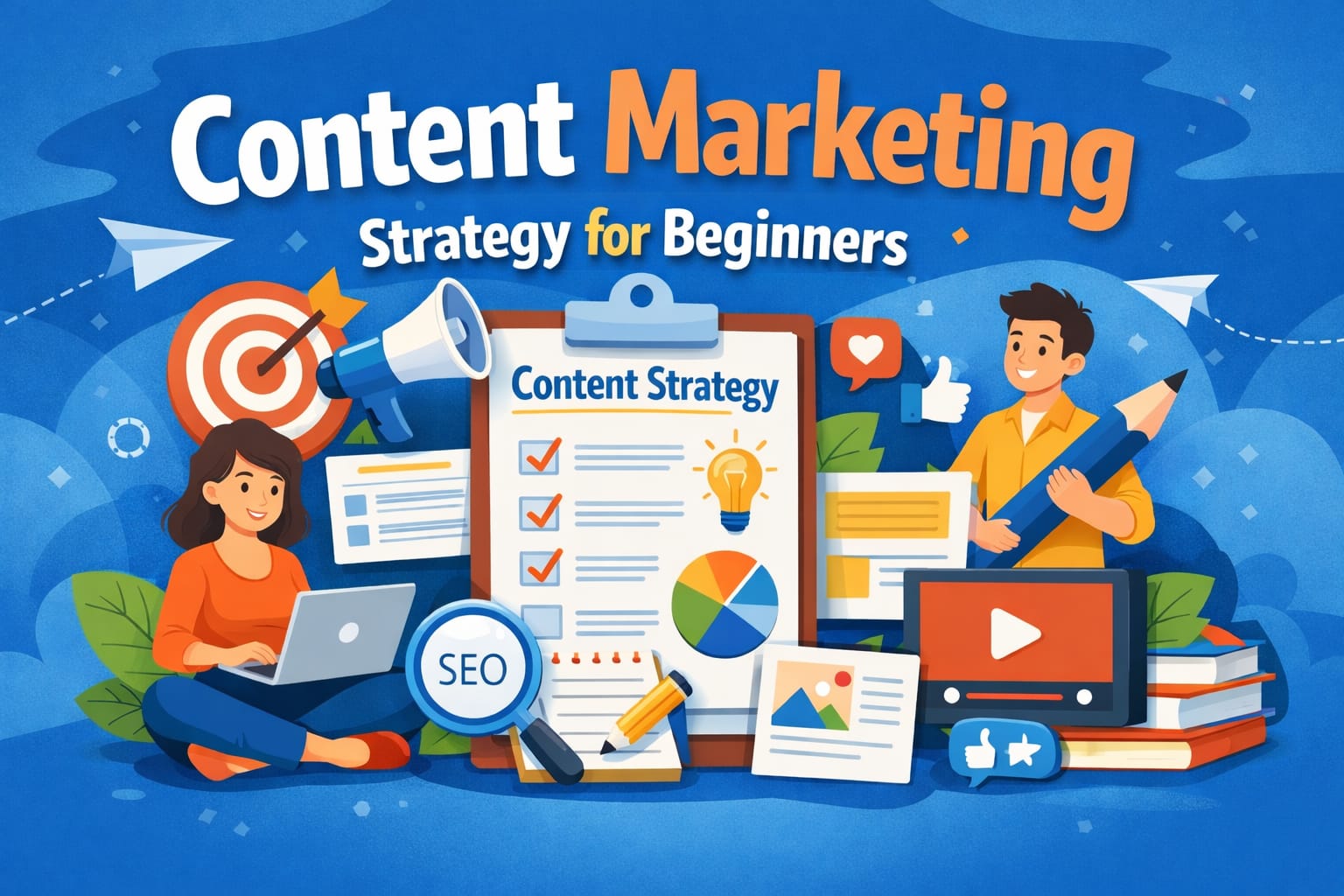
If you want to grow your website traffic, build authority, and generate consistent leads without relying completely on paid ads, you need a strong content marketing strategy supported by a solid on-page SEO checklist ensure every blog post is properly optimized for search engines.
In 2026, content marketing is more data-driven, AI assisted, and user focused than ever before. Search engines prioritize helpful content, experience, expertise, and trust. If you are a beginner, this guide will walk you step-by-step through building a powerful content marketing strategy that actually works.
What Is Content Marketing?
Content marketing is a long term digital marketing strategy focused on creating and distributing valuable content to attract and retain a clearly defined audience.
Instead of directly promoting your product or service, you educate, inform, or solve problems. Over time, this builds trust and increases conversions.
Examples of content marketing include:
-
Blog posts
-
Videos
-
Social media posts
-
Email newsletters
-
Case studies
-
Infographics
-
Podcasts
The goal is simple:
Attract → Engage → Convert → Retain
Why Content Marketing Is Important in 2026
Content marketing continues to dominate digital marketing because:
1. It Drives Organic Traffic
When you publish SEO-optimized content, your website ranks on search engines and brings free organic traffic.
2. It Builds Authority and Trust
When users consistently find helpful information on your website, they see you as an expert in your niche.
3. It Generates Long Term Results
Unlike paid ads, content keeps generating traffic months and even years after publishing.
4. It Supports All Other Marketing Channels
Content fuels:
-
SEO
-
Social media
-
Email marketing
-
Paid ads
-
Lead generation
Without content, digital marketing is incomplete.
Step by Step Content Marketing Strategy for Beginners
Now let’s break down the complete strategy.
Step 1: Define Your Goals Clearly
Before creating content, ask yourself:
-
Do I want traffic?
-
Do I want leads?
-
Do I want sales?
-
Do I want brand awareness?
Your goal determines your content type.
For example:
-
Traffic goal → Informational blog posts
-
Lead goal → Guides + Lead magnets
-
Sales goal → Case studies + Product comparisons
Set SMART goals:
-
Specific
-
Measurable
-
Achievable
-
Relevant
-
Time-bound
Step 2: Identify Your Target Audience
You cannot create effective content if you don’t know who you’re talking to.
Ask:
-
Who is my ideal customer?
-
What problems are they facing?
-
What questions are they searching on Google?
-
What platforms do they use?
Create a simple buyer persona:
Example:
-
Age: 22–35
-
Profession: Small business owner
-
Problem: Wants to grow online presence
-
Goal: Generate more leads
The more clearly you define your audience, the better your content will perform.
Step 3: Perform Keyword Research
Keyword research is the backbone of SEO content marketing.
Find:
-
Low-competition keywords
-
Long-tail keywords
-
Question-based keywords
-
High intent keywords
Focus on search intent:
-
Informational (What is content marketing?)
-
Navigational
-
Transactional (Best content marketing tools)
-
Commercial (Content marketing software comparison)
Targeting the right keywords ensures your content ranks and brings the right audience.
Step 4: Create a Content Plan
Consistency is key.
Create a monthly content plan:
-
4 Blog posts per month
-
8–12 Social media posts
-
2 Email newsletters
Use a content calendar to plan:
-
Topic
-
Target keyword
-
Publish date
-
Content format
-
Promotion strategy
Planning reduces confusion and increases productivity.
Step 5: Create High Quality, SEO Optimized Content
Now comes the execution part.
Follow Proper Structure
Every blog post should include:
-
H1 Title
-
Introduction
-
H2 and H3 headings
-
Short paragraphs
-
Bullet points
-
Internal links
-
Conclusion
Optimize for SEO
-
Use your primary keyword in:
-
Title
-
First 100 words
-
Headings
-
Meta description
-
-
Add related keywords naturally
-
Optimize images with alt text
-
Improve page speed
Focus on Value First
Do not write for search engines only. Write for humans.
Ask:
-
Does this solve a problem?
-
Is this actionable?
-
Is this easy to understand?
Google rewards helpful content.
Step 6: Use Content Clusters (Pillar Strategy)
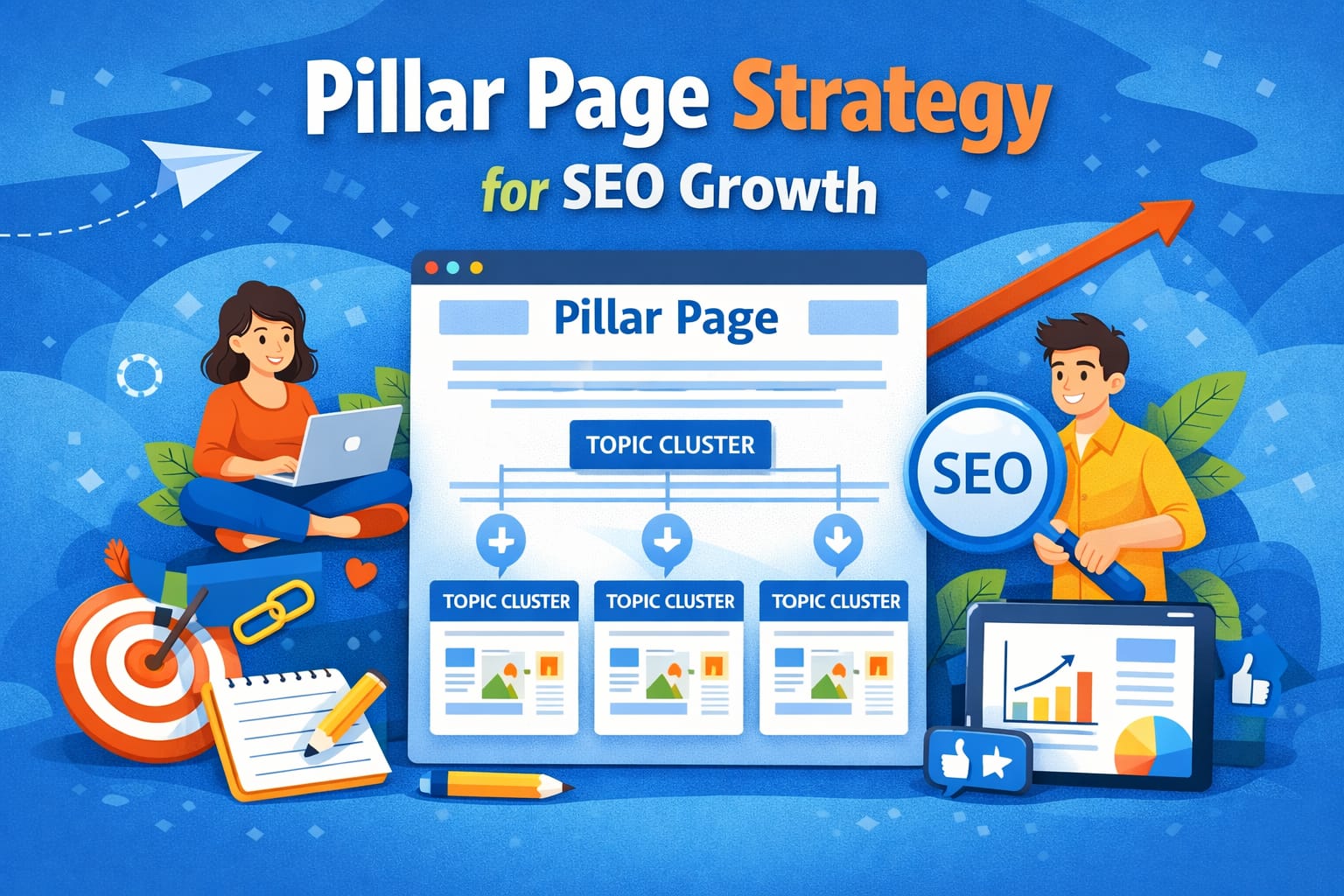
Instead of random blog posts, create topic clusters.
Example:
Pillar page:
-
Content Marketing Guide
Cluster topics:
-
Keyword Research Guide
-
Blogging Strategy
-
Email Marketing Basics
-
SEO Writing Tips
Interlink them properly. This improves SEO authority and rankings.
Step 7: Promote Your Content
Publishing is not enough. Promotion is critical.
Promote your content through:
-
Social media platforms
-
Email newsletters
-
WhatsApp groups (if relevant)
-
LinkedIn posts
-
Pinterest (for blog traffic)
-
Medium reposting
-
Online communities
You can also repurpose:
-
Blog → LinkedIn post
-
Blog → Instagram carousel
-
Blog → Short video
-
Blog → Newsletter
More visibility = More traffic.
Step 8: Track and Measure Performance
Use tools like:
-
Google Analytics
-
Google Search Console
Track:
-
Traffic
-
Bounce rate
-
Keyword rankings
-
Click-through rate
-
Conversions
Identify:
-
Which blog posts perform best
-
Which keywords bring traffic
-
Which content converts most
Then improve low-performing content.
Common Content Marketing Mistakes Beginners Make
Avoid these mistakes:
-
Posting without strategy
-
Ignoring SEO
-
Not defining target audience
-
Inconsistent publishing
-
Writing only promotional content
-
Not tracking performance
Content marketing is a marathon, not a sprint.
Content Marketing Tools for Beginners
Here are essential tools:
-
Keyword research tools
-
SEO optimization tools
-
Grammarly (for writing quality)
-
Canva (for graphics)
-
Google Analytics
-
Content calendar tools
Start simple. Upgrade as you grow.
How Long Does Content Marketing Take to Show Results?
Content marketing usually takes:
-
3–6 months for traffic growth
-
6–12 months for strong authority
-
12+ months for consistent leads
Consistency and quality determine success speed.
Final Thoughts
Content marketing is one of the most powerful long-term digital marketing strategies for beginners in 2026.
If you:
-
Define clear goals
-
Understand your audience
-
Perform keyword research
-
Create high-quality SEO content
-
Stay consistent
-
Track results
You will build sustainable traffic, authority, and conversions.
Frequently Asked Questions (FAQs)
1. What is a content marketing strategy?
A content marketing strategy is a structured plan to create and distribute valuable content that attracts, engages, and converts a target audience. It focuses on solving user problems instead of directly selling products.
2. How do beginners start content marketing?
Beginners should start by defining clear goals, identifying their target audience, performing keyword research, creating a content calendar, and consistently publishing SEO-optimized content.
3. How long does content marketing take to show results?
Content marketing typically takes 3–6 months to show noticeable traffic growth and 6–12 months to generate strong authority and leads.
4. What type of content works best for beginners?
Blog posts, how-to guides, list articles, beginner tutorials, and problem-solving content perform best for beginners because they target informational search intent.
5. Is content marketing better than paid advertising?
Content marketing provides long-term organic growth, while paid advertising delivers quick results. A balanced strategy using both works best.